

Angular
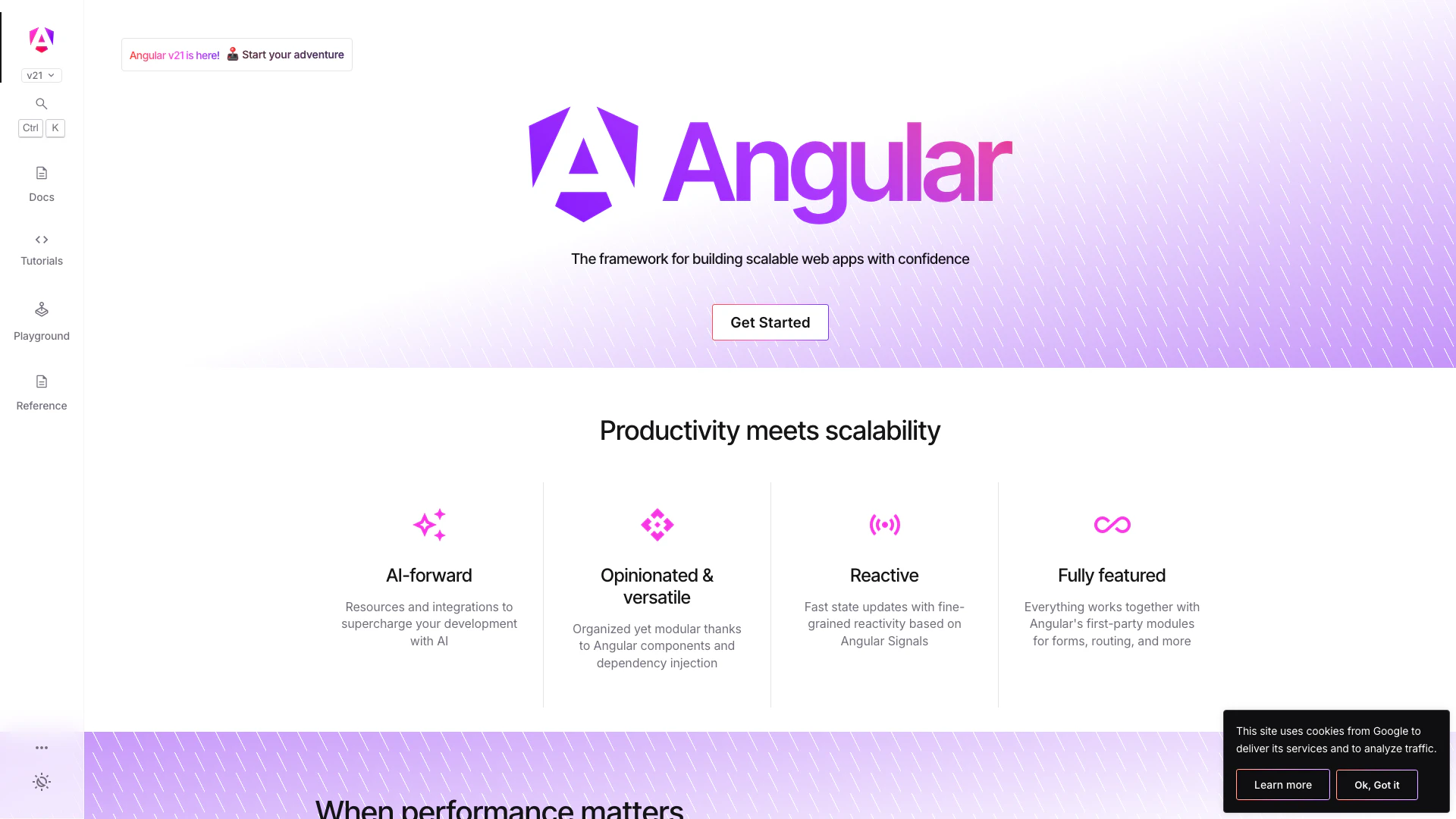





What is Angular?
Angular is a powerful web development framework designed for building modern, scalable applications. Developed and maintained by Google, Angular provides developers with the tools and resources needed to create dynamic web applications with a focus on performance and productivity. It utilizes a component-based architecture, which allows for modular development and efficient state management, making it a popular choice among developers for creating complex applications.
How to use Angular?
- Visit the official Angular website at angular.dev.
- Access the documentation and tutorials to understand the basics of Angular.
- Set up your development environment by installing Node.js and the Angular CLI.
- Create a new Angular project using the command 'ng new project-name'.
- Start the development server by running 'ng serve' and open your browser to view your application.
What are the main features of Angular?
- Component-Based Architecture: Angular applications are built using components, which promote reusability and modular development.
- Dependency Injection: Angular's dependency injection system simplifies the management of services and components.
- Reactive Programming: Angular supports reactive programming with fine-grained reactivity, enabling fast state updates.
- First-Party Modules: Angular provides integrated modules for forms, routing, and HTTP services, enhancing productivity.
- Performance Optimization: Features like Server-Side Rendering (SSR) and Static Site Generation (SSG) help meet performance targets.
Who is Angular for?
Angular is ideal for web developers who are looking to build scalable and high-performance web applications. It is particularly suited for teams working on large projects that require a structured and organized approach to development. Developers with experience in JavaScript and TypeScript will find Angular to be a powerful tool for creating dynamic user interfaces and managing complex application states.
What are the use cases of Angular?
- Single Page Applications (SPAs): Angular is commonly used to develop SPAs that provide a seamless user experience without reloading the page.
- Enterprise Web Applications: Large organizations leverage Angular to build robust applications that require high scalability and maintainability.
- Progressive Web Apps (PWAs): Angular enables the development of PWAs that work offline and provide a native app-like experience.
Angular Pros and Cons
Pros
- Scalable Web Development Framework: Angular is designed for building scalable web applications, making it suitable for both small and large projects.
- Modular Architecture: The framework features a modular architecture with components and dependency injection, allowing for organized and maintainable code.
- Reactive State Management: Angular provides fine-grained reactivity with Angular Signals, enabling fast state updates and efficient management of application state.
Cons
No cons data detected for this tool
Analytics of Angular
Angular Website Traffic Analysis
Visits Over Time
Traffic Sources
Oct 2025 - Dec 2025 Worldwide Desktop Only
- Search: 56.50%
- Direct: 35.08%
- Referrals: 6.98%
- Social: 0.77%
- Paid Referrals: 0.62%
- Mail: 0.05%
Top Keywords
| Keyword | Volume | CPC | Estimated Value |
|---|---|---|---|
| angular | 145.16K | $1.14 | $78730.00 |
| angular material | 30.88K | $1.83 | $26830.00 |
| angular cli | 9.04K | $2.77 | $5290.00 |
| angular 21 | 8.86K | $2.56 | $4980.00 |
| angular versions | 2.88K | $3.53 | $1750.00 |



Angular Social Listening
Angular Tutorial for Beginners...
Angular tutorial for beginners...
Angular for Beginners Course [...
Learn Angular in this complete...
Learn Angular A-Z: Complete Tu...
It's not an exaggeration to sa...
Unlock to view 45 social media results.