Warehouse Optimization




What is Warehouse Optimization?
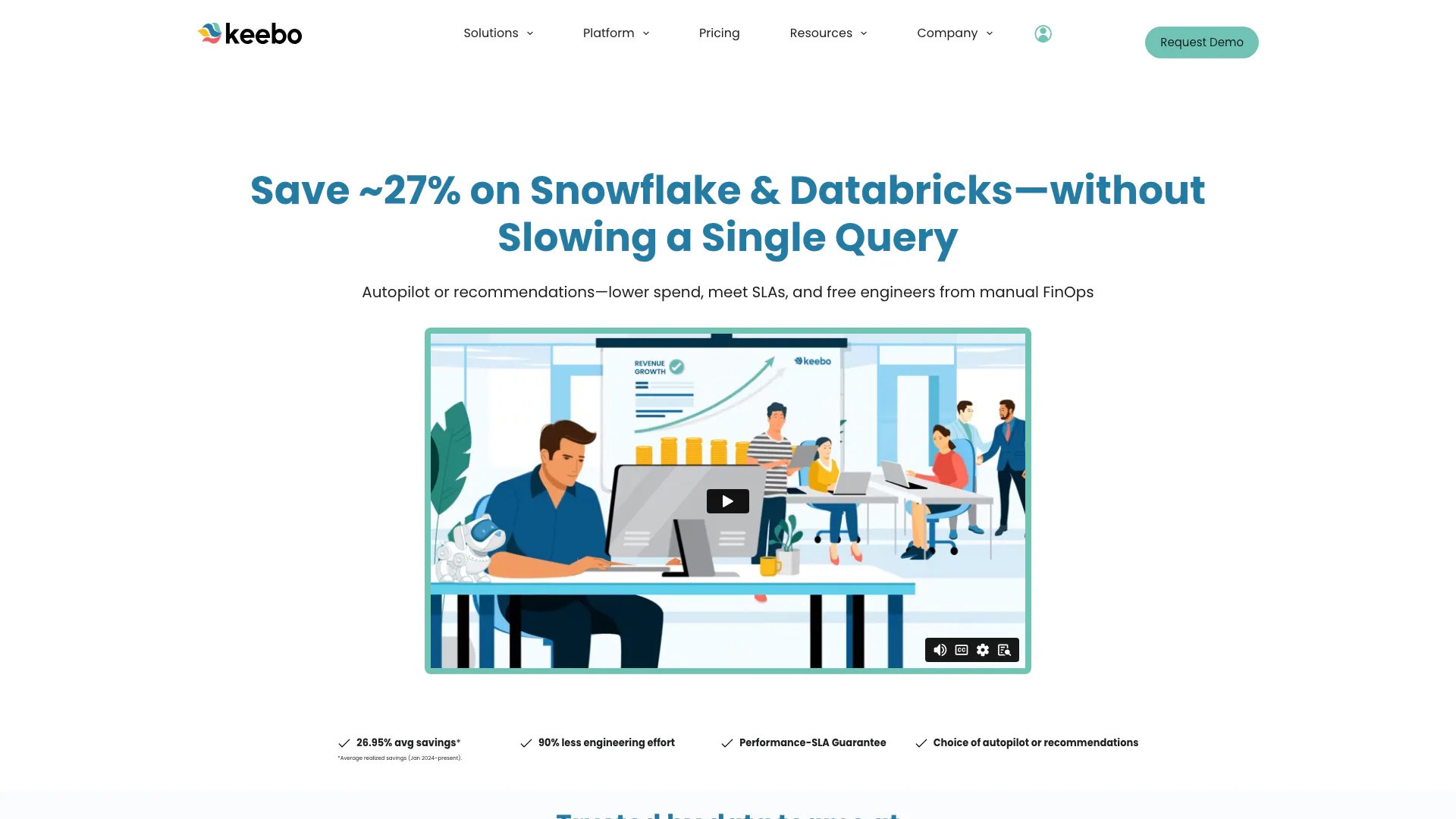
Warehouse Optimization is a cutting-edge, fully automated tool designed to enhance data warehouse performance and analytics efficiency. It leverages advanced AI technology to optimize data storage and retrieval processes, particularly for platforms like Snowflake and Databricks. By continuously monitoring and adjusting settings, Warehouse Optimization helps organizations achieve significant cost savings while ensuring that query performance remains fast and reliable. This tool is essential for businesses looking to streamline their data operations and maximize their return on investment in cloud data warehousing.
How to use Warehouse Optimization?
- Sign Up: Visit the Keebo website and create an account to access Warehouse Optimization.
- Setup: Follow the guided setup process, which typically takes about 30 minutes. You'll need to provide access to your Snowflake or Databricks metadata.
- Select Automation Mode: Choose between fully autonomous optimizations or a human-in-the-loop approach, depending on your team's preferences.
- Monitor Performance: Use the dashboard to observe real-time performance metrics and the effectiveness of optimizations.
- Adjust Settings: Fine-tune optimization settings as needed to align with your operational goals, ensuring that performance remains a priority.
What are the main features of Warehouse Optimization?
- Fully Autonomous Optimization: Continuously adapts to capture cost and performance opportunities without manual intervention.
- Flexible Automation Modes: Options for fully automated or semi-automated processes, allowing teams to choose their level of involvement.
- Performance-SLA Guarantee: Assures that query performance will not degrade due to optimizations.
- Verifiable Savings: Provides transparent, independently verifiable savings on cloud data warehousing costs.
- Smart Query Routing: Enhances performance by intelligently directing queries to optimize warehouse utilization.
Who is Warehouse Optimization for?
Warehouse Optimization is tailored for data teams, financial analysts, and IT professionals who work with cloud data warehousing solutions like Snowflake and Databricks. It is particularly beneficial for organizations in sectors such as financial services, healthcare, technology, and retail, where efficient data management and cost control are critical. Companies looking to minimize operational costs while maximizing data performance will find this tool invaluable, especially those aiming to reduce engineering effort and improve overall team efficiency.
What are the use cases of Warehouse Optimization?
- Cost Reduction: Organizations can significantly lower their cloud data warehousing expenses, achieving average savings of around 27% on platforms like Snowflake and Databricks.
- Performance Improvement: Businesses can enhance the speed and reliability of their data queries without compromising performance, ensuring that SLAs are consistently met.
- Resource Management: The tool enables dynamic right-sizing of data warehouse resources, allowing companies to scale their data infrastructure efficiently based on real-time usage patterns.
Warehouse Optimization Pros and Cons
Pros
- Cost Savings: The tool offers an average savings of 26.95% on Snowflake and Databricks without slowing down queries.
- Hands-Free Performance: It reclaims hundreds of engineering hours per month, ensuring efficiency and maximizing ROI.
- Flexible Automation Modes: Users can choose between fully autonomous or human-in-the-loop optimization modes, allowing for tailored governance.
- Real-Time Optimizations: The AI-driven optimizations capture missed savings opportunities in real-time, ensuring continuous efficiency.
- Zero Implementation Risk: Setup takes only 30 minutes with no data migration or operational disruptions required.
Cons
No cons data detected for this tool
Analytics of Warehouse Optimization
Warehouse Optimization Website Traffic Analysis
Visits Over Time
Traffic Sources
Oct 2025 - Dec 2025 Worldwide Desktop Only
- Direct: 47.38%
- Search: 35.34%
- Social: 9.78%
- Referrals: 6.40%
- Paid Referrals: 1.05%
- Mail: 0.06%
Top Keywords
| Keyword | Volume | CPC | Estimated Value |
|---|---|---|---|
| keebo | 1.05K | $2.66 | $80.00 |
| databricks vs snowflake price | 230 | $0.00 | $70.00 |
| snowflake adaptive w arehouse | 90 | $0.00 | $90.00 |
| databricks keebo | 50 | $0.00 | $30.00 |
| 真島建設 スウェット | 20 | $0.00 | $10.00 |