Tencent





What is Tencent?
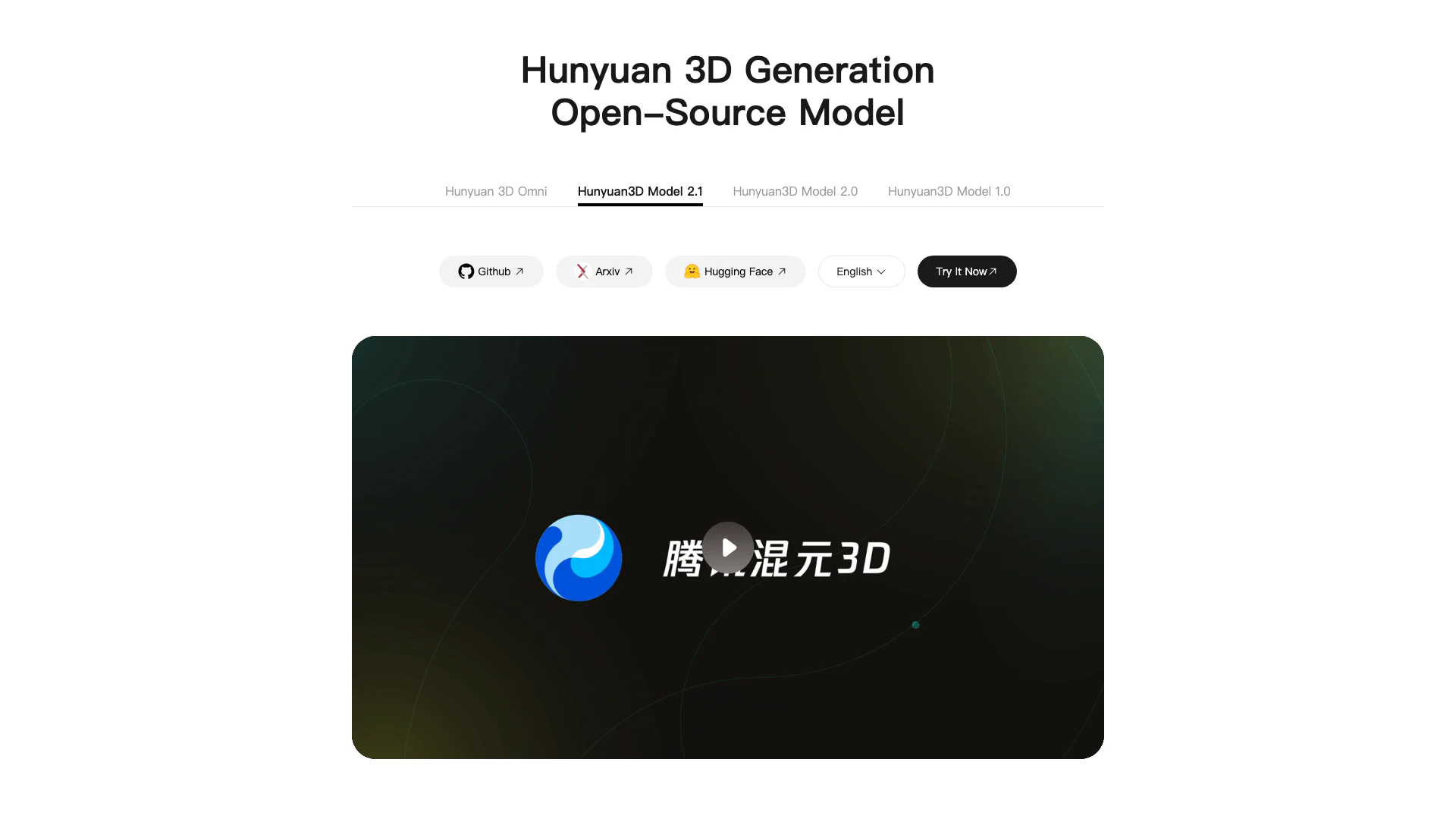
Tencent Hunyuan 3D is a state-of-the-art generative model that utilizes Diffusion technology to create 3D assets from text and images. This innovative tool is equipped with meticulously designed text and image encoders, a diffusion model, and a 3D decoder, enabling it to generate, reconstruct, and produce multi-view and single-view 3D objects. With its ability to quickly generate stunning 3D models, Tencent Hunyuan 3D serves a wide range of downstream applications, making it a versatile choice for developers and designers in various fields.
How to use Tencent?
- Visit the Tencent Hunyuan 3D website and sign up for an account.
- Access the model interface where you can input text or upload images to generate 3D assets.
- Utilize the provided tools to customize your 3D models, adjusting parameters as needed.
- Review the generated models, and make further refinements if necessary.
- Export the final 3D assets for use in your projects or applications.
What are the main features of Tencent?
- Diffusion Technology: Leverages advanced diffusion techniques for generating high-quality 3D models.
- Text and Image Input: Supports both text and image inputs for versatile 3D asset creation.
- Multi-View and Single-View Generation: Capable of producing 3D assets from multiple perspectives or a single view.
- Physically-Based Rendering (PBR): Offers PBR material synthesis for realistic light interaction and texture generation.
- Open-Source Framework: Fully open-sourced, allowing community developers to fine-tune and adapt the model for various applications.
Who is Tencent for?
Tencent Hunyuan 3D is designed for a diverse range of users, including game developers, industrial designers, and researchers in the field of computer graphics. Its open-source nature makes it particularly appealing to developers looking to customize and extend the model for specific projects. Additionally, educators and students in design and technology fields can benefit from its capabilities for learning and experimentation in 3D asset creation.
What are the use cases of Tencent?
- Game Development: Creating high-quality 3D assets for video games, enhancing visual fidelity and realism.
- Industrial Design: Utilizing the model to generate prototypes and visualizations of products, improving design workflows.
- Academic Research: Supporting research in 3D graphics and generative modeling through its open-source framework, facilitating experimentation and innovation.
Tencent Pros and Cons
Pros
- Open-Source Model: The first fully open-sourced production-ready 3D generative model allows community developers to fine-tune and extend the model for various applications.
- PBR Material Generation: Supports Physically-Based Rendering (PBR) material synthesis, achieving production-grade precision for complex materials like leather and bronze.
- High Precision and Versatility: Enables multi-view generation, reconstruction, and single-view generation, making it suitable for diverse downstream applications.
Cons
No cons data detected for this tool