Dawn



What is Dawn?
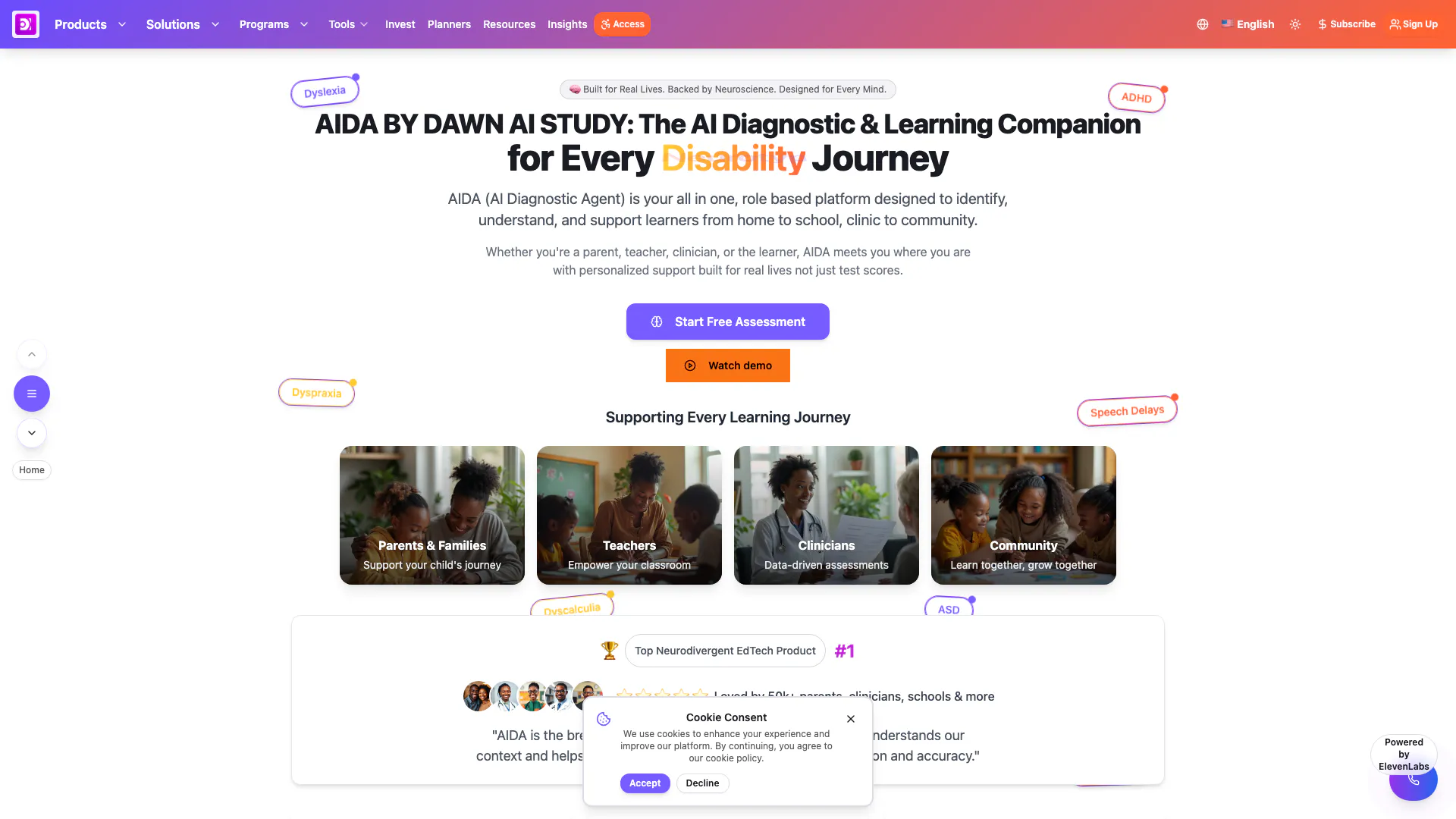
Dawn is an innovative AI-powered educational technology platform, specifically designed to support neurodivergent learners across Africa. Utilizing blockchain technology, Dawn aims to revolutionize learning by providing personalized educational experiences tailored to individual needs. Its flagship feature, AIDA (AI Diagnostic Agent), serves as a comprehensive diagnostic and learning companion, helping parents, teachers, and clinicians understand and support the unique learning profiles of children with various neurodevelopmental challenges.
How to use Dawn?
- Sign up for a free account on the Dawn website to access AIDA.
- Complete a brief questionnaire to help AIDA understand the learner's needs and background.
- Utilize the AI diagnostic features to assess the learner's strengths and challenges.
- Review the personalized recommendations provided by AIDA, including tailored learning strategies and resources.
- Implement the suggested strategies at home or in the classroom, and track progress through the platform's analytics.
What are the main features of Dawn?
- AI Diagnostic Agent (AIDA) for personalized assessments
- Early detection of neurodivergent traits such as ADHD, dyslexia, and autism
- Role-based insights for parents, teachers, clinicians, and administrators
- Multilingual support, fine-tuned for African languages and accents
- Real-time learning analytics to monitor progress and engagement
- Inclusive learning journeys tailored to each child's neurotype
- Data-driven support for educational interventions and strategies.
Who is Dawn for?
Dawn is designed for a wide range of users, including parents seeking to understand their child's learning needs, teachers looking to empower their classrooms with inclusive strategies, and clinicians who require data-driven assessments for neurodivergent children. Additionally, it serves educational administrators and community organizations focused on fostering an inclusive learning environment for all students, particularly those with learning differences.
What are the use cases of Dawn?
- Early identification and support for children showing signs of learning disabilities such as dyslexia and ADHD.
- Providing teachers with tailored strategies to adapt lesson plans for neurodiverse students.
- Assisting clinicians in conducting assessments and developing treatment plans based on real-time data and insights from AIDA.
- Engaging parents in their child's learning journey by offering tools and resources to support at home.
- Enhancing educational equity by providing access to personalized learning tools in underserved communities.
Dawn Pros and Cons
Pros
- Personalized Support: AIDA provides tailored support for parents, teachers, clinicians, and learners, adapting to their specific needs and roles.
- Voice-First Interface: AIDA's voice-native platform allows for natural conversation and real-time assessments, enhancing user interaction and experience.
- Cultural Adaptation: Designed with African contexts in mind, AIDA supports multiple local languages and cultural nuances, making it accessible to diverse users.
- High Diagnostic Accuracy: AIDA claims an accuracy rate of 89.2% in diagnostics, validated against clinical standards, which enhances trust in its assessments.
- Ethics and Compliance: AIDA is GDPR compliant, SOC 2 Type II compliant, and HIPAA ready, ensuring user data is protected and privacy is prioritized.
Cons
- Limited Functionality for Non-Voice Users: While AIDA emphasizes voice interaction, users who may not be comfortable with voice input might find the tool less accessible.
- Not a Replacement for Professional Diagnosis: AIDA provides educational insights but is not a substitute for formal medical diagnosis, which may limit its use for some users.